
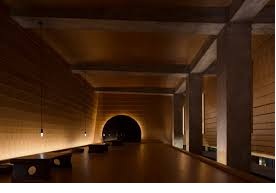
Have a separate meditation room under lock and key. Never allow anyone to enter the room. Keep it sacred. If you cannot afford to have a special room for contemplative purposes and for practicing Pranayama, have a place in the corner of a quiet room, set apart for this purpose. Have it screened. Place the photo of your Guru or Ishta Devata in the room in front of your Asana. Do Puja daily to the picture, physically and mentally, before you start meditation and Pranayama burn incense in the room or burn agarbatti (incense sticks). Keep some sacred books there such as Ramayana, Srimad Bhagavatam, Gita, Upanishads, Yoga-Vasishtha, etc., for your daily study. Spread a fourfold blanket and over it a piece of soft white cloth. This will serve the purpose of an Asana. Or spread an Asana of Kusa grass. Over it spread a deer or tiger skin. Sit on this Asana for practising Pranayama and meditation. You can have a raised platform made of cement. Over this you can spread your Asana. Small insects, ants etc., will not molest you. When you sit on the Asana keep your head, neck and trunk in a straight line. By doing so, the spinal cord that lies with the spinal column will be quite free.
Five things are necessary for practicing Pranayama. First a good place; second, a suitable time; third, moderate, substantial, light and nutritious food; fourth, patient and persistent practice with zeal, ease and earnestness and lastly the purification of Nadis (Nadi-Suddhi).
Gradually one should be able to retain the breath for 3Ghatikas (one your and half) at a time. Through this, the Yogi gets many psychic powers. When anyone wants to stop the breath for a long period, he should remain by the side of a Yogi Guru, who knows the practice of Pranayama thoroughly. The breath can be suspended by graduated practice from one to three minutes without the help of anybody. Suspension for three minutes is quite sufficient for purifying the Nadis and steadying the mind and for the purpose of good health.
Gradually breath retention increases and gives psychic powers.
Select a solitary, beautiful and pleasant spot, where there are no disturbances; on the bank of a river, lake or the sea or the top of a hill where there is a nice spring and grove of trees, and where milk and articles of food are easily procurable. Build a small Kutir or hut. Have one compound. In the corner of the enclosure, sink a well. It is impossible to get an ideal place that can satisfy you from all view-points.
The banks of Narmada, Jamuna, Ganga, Kaveri, Godavari, Krishna are very suitable for building Kutirs or huts. You must select one such spot, where there are some other Yogic practitioners in the neighborhood. You can consult them in times of difficulties. You will have faith in the Yogic Kriyas. When you see others also who are devoted to such Yogic practices, you will diligently apply yourself in your practice, as you will get an impetus and you will strive to excel them. Nasik, Rishikesh, Jhansi, Prayag, Uttarkasi, Vrindaban, Ayodhya, Varanasi, etc., are good places. You can fix a spot in a place far from the crowded localities. If you build a Kutir in a crowded place. People out of curiosity will molest you. You will have no spiritual vibrations there. You will be without any protection if you build your cottage in a thick forest. Thieves and wild animals will trouble you. The question of difficulty for food will arise. In Svetasvatara Upanishad it is said: “At a level place, free from pebbles, fire and gravel; pleasant to the eyes, and repairing to a cave, protected from the wind, let a person apply his mind to God.” Those who practise in their own houses can convert a room into a forest. Any solitary room will serve their purpose well.
The banks of Narmada, Jamuna, Ganga, Kaveri, Godavari, Krishna are very suitable for building Kutirs or huts. You must select one such spot, where there are some other Yogic practitioners in the neighborhood. You can consult them in times of difficulties. You will have faith in the Yogic Kriyas. When you see others also who are devoted to such Yogic practices, you will diligently apply yourself in your practice, as you will get an impetus and you will strive to excel them. Nasik, Rishikesh, Jhansi, Prayag, Uttarkasi, Vrindaban, Ayodhya, Varanasi, etc., are good places. You can fix a spot in a place far from the crowded localities. If you build a Kutir in a crowded place. People out of curiosity will molest you. You will have no spiritual vibrations there. You will be without any protection if you build your cottage in a thick forest. Thieves and wild animals will trouble you. The question of difficulty for food will arise. In Svetasvatara Upanishad it is said: “At a level place, free from pebbles, fire and gravel; pleasant to the eyes, and repairing to a cave, protected from the wind, let a person apply his mind to God.” Those who practise in their own houses can convert a room into a forest. Any solitary room will serve their purpose well.
Practice in early morning.
One who has a calm mind, who has subdued his Indriyas, who has faith in the words of the Guru and Sastras, who is an Astika (i.e., one who believes in God)
and is moderate in eating, drinking and sleeping and one who has an eager longing for deliverance form the wheel of births and deaths-is and Adhikari (qualified person) for the practice of Yoga.
Such a man can easily get success in the practice. Pranayama should be practised with care; perseverance and faith. Those who are addicted to sensual pleasures or those who are arrogant, dishonest, untruthful, diplomatic, cunning and treacherous; those who disrespect Sadhus, Sannyasins and their Gurus or spiritual preceptors and take pleasure in vain controversies, or of a highly talkative nature, those who are disbelievers, who mix much with worldly-minded people, who are cruel, harsh and greedy and do much useless Vyavahara, can never attain success in Pranayama or any other Yogic practice.
There are three types of Adhikaris-viz., (1) good (Uttama), (2) middle (Madhyama) and (3) inferior (Adhama) according to samskaras, intelligence, degree of Vairagya, Viveka and Mumukshutva and the capacity for Sadhana. You must approach a Guru, who knows Yogasastra and has mastery over it. Sit at his lotus-feet. Serve him. Clear your doubts through sensible and reasonable questions. Receive instructions and practise them with enthusiasm, zeal, attention, earnestness and faith, according to the methods taught by the teacher.
A Pranayama practitioner should always speak kind and sweet words. He must be kind to everybody. He must be honest. He must speak the truth. He must develop Vairagya, patience, Sraddha (faith) Bhakti (devotion), Karuna (mercy), etc. He must observe perfect celibacy. A householder should be very moderate in sexual matters during the practice.
Avoid arrogance, dishonesty and distractions.
The Yogi should take his food at a time when Surya Nadi of Pingala is working. i.e. when the breath flows through the right nostril, because Pingala is heating and digests the food quickly. Pranayama should not be practiced just after taking meals, not when one is very hungry.
When the Nadis are purified the aspirant enters the first stage in the practice of Yoga- “Arambha”. A Pranayama practitioner has a good appetite, good digestion, cheerfulness, courage, strength, vigour, a high standard of vitality and a handsome appearance.