
The proficient in Yoga should abandon articles of food, detrimental to the practice of Yoga. He should give up salt, mustard, sour, hot, pungent and bitter things, asafoetida, worship of fire, women, too much walking, bathing at sunrise, emaciation of the body by fasts, etc. During the early stages of practice food of milk and ghee pulse and red rice is said to favour the progress. Then he will be able to retain his breath as long he likes. By thus retaining the breath as long as he likes Kevala Kumbaka (cessation of breath without. Inspiration and expiration) is attained. When Kevala Kumbhaka is attained by one, expiration and inspiration are dispensed with. There is nothing unattainable in the three worlds for him. In the commencement of his practice sweat is getting out. At a frog moves by leaps so the Yogi sitting in Padmasana moves on the earth. With a further increased practice, he is able to rise from the ground. He, while seated in lotus-posture levitates. Then arise powers with in him to perform extraordinary feats. Any pain, small or great, does not affect the Yogi. Then excretions and sleep are diminished; tears, rheum in the eyes, salivary flow, With a still further practice, he acquires great strength by which he attains Bhuchara Siddhi which enables him to bring under his control all the creatures that tread on this earth; tigers, Sarabhas, elephants, wild bulls and lions even die by a blow given by the palms of this Yogi. He becomes as beautiful as the God of Love himself. By the preservation off the semen a good odour pervades the body of the Yogi.
Instinct or voice within will guide you in the selection of articles of diet. You are yourself the best judge to form a Sattvic Yogic menu to suit your temperament and constitution. Further information is given in the Appendix.
Take wholesome Sattvic food half stomachful. Fill a quarter with pure water. Allow the remaining quarter free for expansion of gas and for propitiating the Lord.
By the purity of food, follows the purification of the inner nature, on the purity of the inner nature, the memory becomes firm and on the strengthening of memory follows the loosening of all ties and the wise get liberation thereby.
You must not practise Pranayama just after meals. When you are very hungry, then also you must not practise. Go to the water closet and empty the bewels before you begin Pranayama. A Pranayama practitioner should observe Samyama (control) in food and drink.
Those who are strict and regular in diet derive immense benefits during the course of practice. They get success quickly. Those persons who suffer from chronic constipation and who are in the habit of defecating in the afternoon can practise Pranayama in the early morning without answering the calls of nature. They should try their level best by some means or other to get and evacuation of their bowels in the early morning.
Food plays a very important role in Yoga Sadhana. An aspirant should be very, very careful in the selection of articles of diet, in the beginning of his Sadhana period. Later on when Pranayama-Saddhi is obtained drastic dietetic restriction can be removed.
This is a mixture of boiled, white rice, ghee, sugar and milk. This is a wholesome combination for Brahmacharins and Pranayama-practitioners.
Milk should be scalded but not too much boiled. The process of scalding is that the milk should be immediately removed from the fire as soon as the boiling point is reached. Too much boiling destroys the vitamins, the mysterious nutritive principles and renders it quite useless as an article of diet. Milk is a perfect food by itself, containing as it does, the different nutritive constituents in a well-balanced proportion. It leaves very little residue in the bowels. This is an ideal food for Yogic students during Pranayama practice.
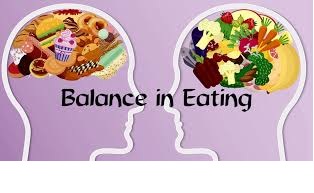
A fruit diet exercises a benign, soothing influence on the constitution and is a very desirable diet for Yogins. This is a natural form of diet. Fruits are very great energy-products. Bananas, grapes, sweet oranges, apples, pomegranates. Mangoes, Chickkus (Sappota), and dates are wholesome fruits. Lemons possess anti-scorbutic properties and act as restoratives to blood. Fruit-juice contains vitamin C. Chikkus increase pure blood. Mangoes and milk, is a healthy agreeable combination. You can live on mangoes and milk alone. Pomegranate juice is cooling and very nutritious. Bananas are very nutritious and substantial. Fruits help concentration and easy mental focusing
Bananas, apples, mangoes, grapes, pomegranates are recommended.
Barely, wheat, ghee, milk, almonds promote longevity and increase power and strenth. Barely is a fine article of diet for a Yogi and Sadhaka. It is cooling too. Sri Swami Narayan, the author of “Ek Santka Anubhava”, who wears a Kowpeen of gunny bag, lives on bread, made up of barley. He recommends barley bread to his disciples. It is said that Emperor Akbar lived upon barley
You can take wheat, rice, bareley, milk, bread, cow’s milk, ghee, sugar, butter, sugar-candy, honey, dried ginger (soont), green pulse, Moongdal, Panchashaka vegetables, Peypudalai, potatoes, raisins, dates, light Khichdi of green dal. Khichdi is a light food and can be agreeably taken. The food should be reduced in proportion to the increase in Kumbhaka. You must not reduce your food much. in the beginning of your practice. You must use your common-sense, all throughout the Sadhana. Toorki dal can be taken. The Pancha-shaka belongs to the species of spinach. They are excellent vegetables; the thick succulent young leaves are boiled and seasoned or fried with ghee. They are five in number, viz.-Seendil, Chakravarthi, Ponnangani Chirukeerai and Vallio-charnai keerai. When the Pingala or Suryanadi runs in the right nostril, your must take your food. Suryanadi produces heat. It will digest the food well. You may take jack-fruit, cucumber, brinjal, and plantain stem, Laukee, Parwal and Bhindi (lady’s finger).
Highly seasoned dishes, hot curries, chutnies, meat, fishes, chillies, sour articles, tamarind, mustard, all kinds of oil, asafoetida, salt, garlic, onions, uradki dal, (black gram), all bitter things, dry foods, black sugar, vinegar, alcohol, sour curd, state foods, acids, astringents, pungent stuff, roasted things, heavy vegetables, over-ripe or unripe fruits, pumpkins, etc., must be avoided. Meat can make man a scientist but rarely a Philosopher, Yogi or a Tattva Jnani. Onions and garlic are worse than meat. All food-stuffs contain a small quantity of salt. So, even if you do not add salt separately, the system will derive the necessary quantity of salt from other food-stuffs. The giving up of salt will not produce deficiency of hydrochloric acid and dspepsia as allopathic doctors foolishly imagine. Salt excites passion. No ill-effects are produced by the giving up of salt. Mahatma Gandhi and Swami Yogananda had given up salt for over thirteen years. Giving up salt helps you in controlling the tongue and thereby the mind also and in developing will-power too. You will have good health. Sitting before fire, company of women and worldlyminded people, Yatra, long walk, carrying heavy burdens, cold bath in the early morning, harsh words, speaking untruth, dishonest practices, theft, killing animals, Himsa of all kinds either in thought,
word or deed, hatred and enmity towards an person, fighting, quarrelling, pride, double-dealing, intriguing, back-biting, tale-bearing, crookedness, talks other than those of Atma and Moksha, cruelty towards animals and men, too much fasting or eating only once every day, etc., are not allowed for a Pranayama practitioner.