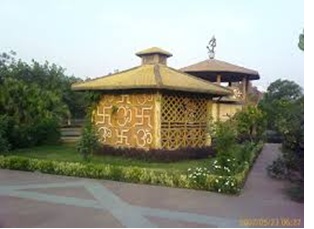
The Pranayama student should erect a beautiful room or Kutir with a small opening and no crevices. It should be clean and free from bugs, mosquitoes and lice. It should be swept daily and fragrant incense should be burnt. Sitting on a proper Asana made of cloth, deer-skin and Kusha-grass, the aspirant should assume lotus posture and salute his deity and Sri Ganesh before beginning Pranayama.
The time taken in making a round of the palm of the hand, neither very slowly nor quickly snapping the fingers once, is called a Matra.Each time-unit is called a Matra. The twinkling of an eye is sometimes taken as the period of one Matra. Time occupied by one normal respiration is considered as one Matra. Time taken up in pronouncing the mono-syllable, OM, is regarded as one Matra. This is very convenient. Many Pranayama practitioners adopt this time-unit in their practive
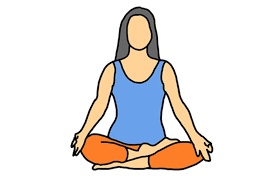
This is also known by the name Kamalasana. Kamala means lotus. When the Asana is demonstrated it presents the appearance of lotus in away. Hence the name Padmasana. Amongst the four poses prescribed for Japa and Dhyana, Padmasana comes foremost. It is the best Asana for contemplation. Rishis like Gheranda, Sandilya, speak very highly of this important Asana. This is highly agreeable for householders. Even ladies can sit in this Asana. Padmasana is suitable for lean persons and for youths as well.
Sit on the ground by spreading the legs forward. Then place the right foot on the left thigh and the left-joints. You can make a finger-lock and keep the locked hands over the left ankle. This is very convenient for some persons. Or you can place the left hand over the left knee and the right hand over the right knee with the palm facing upwards and the index finger touching the middle portion of the thumb (Chinmudra).
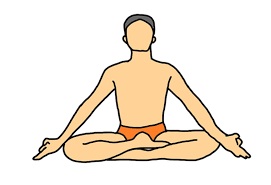
Next to Padmasana comes Siddasana in importance. Some eulogize this Asana as even superior to Padmasana for the purpose of Dhyana (contemplation). If you get mastery over this Asana you will acquire many Siddhis. Further, it was being practised by many Siddhas (perfected Yogins) of yore. Hence the name Siddhasana. Even fatty persons with big thighs can practise this Asana easily. In fact this is better for some persons than Padmasana. Young Brahmacharins, who attempt to get established in celibacy, should practise this Asana. This is not suitable for ladies.
Svastika is sitting at ease with the body erect. Spread the legs forward. Fold the left leg and place the foot near the right thigh muscles. Similarly, bend the right leg and push the foot in the space between the thigh and calf muscles. Now you will find the feet between the thighs and calves of the legs. This is very comfortable for meditation. Keep the hands as instructed in Padmasana.
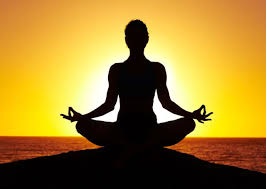
Place the left heel at the beginning of the right thigh and the right heel at the beginning of the left thigh. Sit at ease. Do not bend either on the left or right. This is called as Samasana.
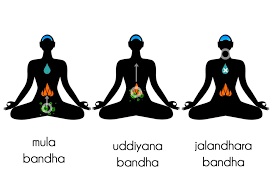
There are four Bhedas (piercings of division) viz., Surya, Ujjayi, Sitali and Basti. Through these four ways, when Kumbhaka is near or about to be performed, the sinless Yogi should practise the three Bandhas. The first is called Mula Bandha. The second is called Uddiyana, and the third is Jalandhara, Their nature will be thus described. Apana which has a downward tendency is forced up by contracting and drawing the anus upwards. This process is called Mula Bandha. When Apana is raised up and reaches the sphere of Agni (fire), then the flame of Agni and Apana come to or commingle with Prana in a heated state, Through this Agni, which rouses the sleeping Kundalini.
Then the Kundalini makes a hissing noise, becomes erect like a serpent beaten with a stick and enters into the hole of Brahmanadi (Sushumna). Therefore Yogins should daily practise Mula Bandha. Uddiyana should be performed at the end of Kumbhak and at the beginning of inhalation. Because Prana ‘Uddiyate’- goes up the Sushumna in this Bandha, it is called Uddiyana by the Yogins. Being seated in the Vijra posture and holding firmly the two toes by the two hands near the two ankles, he should gradually upbear the Tana (thread or Nadi, the Sarasvati Nadi) which is on the western side of Udara (the upper part of the abdomen, above the navel), then to neck. When Prana reaches Sandhi (junction) of navel, slowly it removes the diseases of the navel. Therefore this should be practised perfectly. The Bandha called Jalandhara should be practised at the end of Puraka. Jalandhara is of the form of the contraction of the neck and is an impediment to the passage of Vayu upwards. When the neck is contracted by bending the head downwards so that the chin may touch the chest. Prana goes through Brahmanadi. Assuming the seat, as mentioned before, one should stir up Sarasvati and control Prana. On the first day Kumbhaka should be done four times, on the second day ten times and then five times separately. On the third day, twenty times will do and afterwards Kumbhaka should be performed with the Bandhas and with as increase of two times per day.
Pranava should be chanted with three Matras (prolonged intonations). This is for the destruction of the former sins. The Mantra, Pranava, destroys all obstacles and all sins. By practising this he attains the ‘Arambha Avastha’ (the beginning or first stage). The body of the Yogi begins to perspire. When it perspires, he should rub it well with the hands. The trembling of the body also occurs. He sometimes jumps like a frog.
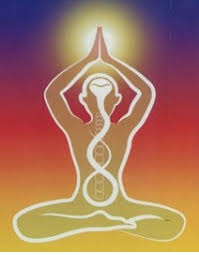
Then follows the Ghata Aa\vastha, the second state, which is acquired by constantly practising suppression of breath. When a perfect union takes place between Prana and Apana, Manas and Buddhi or Jivatma and Paramatma without opposition, it is called Ghata Avastha. He may now practise only for about one-fourth of the period prescribed for the practice before. By day and by evening let him practise only for about one-fourth of the period prescribed for the practice before. By day and by evening let him practise only for a Yama (3 hours). Let him practise the Kevala Kumbhaka once a day. Drawing away completely the organs from the objects of senses during cessation of breath is called Pratyahara. Whatever he sees with his eyes, let him consider as Atman. Whatever he hears with his ears, let him consider as Atman. Whatever he smells with his nose, let him consider as Atman. Whatever the Yogi touches with his skin, let him consider as Atman. Then various wonderful powers are obtained by the Yogi, such as clairvoyance, clairaudience, ability to transport himself to great distances within a moment, great power of speech, ability to take up any form he likes, ability to become invisible and the wonder of transmuting iron into gold.
Then by such constant practice, the Parichaya Avastha (the third state) is gained. Vayu or breath, through arduous practice pierces the Kundalini, along with Agni through thought and enters the Sushumna, uninterrupted. When one’s Chitta enters Sushmna along with Prana, it reaches the high seat in the head, along with Prana. When the Yogi by the practice of Yoga acquires power of action (Kriya Shakti) and pierces through the six Chakras and reaches the secure condition of Parichaya, the Yogi then verily sees the threefold effects of Karma. Then let the Yogi destroy the multitude of Karmas by the Pranava. Let him accomplish “Kaya-Vyuha, a mystical process of arranging the various Skandhas of the body and taking various bodies, in order to exhaust all his previous Karmas without the necessity of being reborn. At that time let the great Yogi practise the five Dharanas” or forms of concentration by which, command over the five elements is gained and fear of injuries by any one of them is removed.
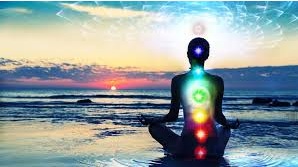
This is the fourth stage of Pranayama. Thourgh graduated practice the Yogi reaches the Nishpatti Avastha, the state of consummation. The Yogi, having destroyed all the seeds of Karma drinks the nectar of immortality. He feels neither hunger nor thirst, nor sleep nor swoon. He becomes absolutely independent. He can move anywhere in the world. He is never reborn. He is free from all diseases, decay and old age. He enjoys the bliss of Samadhi. He is no longer in need of any Yogic practice. When the skilful tranquil Yogi can drink the Prana Vayu by placing tongue at the root of the palate, when he knows the laws of action of Prana and Apana, then he becomes entitled to liberation.
AYogic student will automatically experience these entire Avasthas one by as he advances in his systematic, regular practices. An impatient student cannot experience any of these Avasthas through occasional practices. Care should be taken in the observances of Mitahara and Brahmacharya.