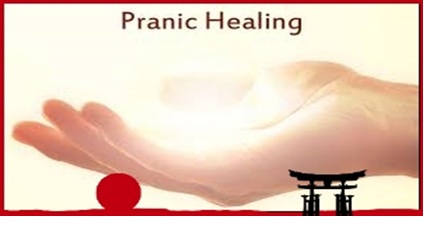
Those who practise Pranayama can impart their Prana in healing morbid diseases. They can also recharge themselves with Prana in no time by practising Kumbhaka. Never think that you will be depleted of your Prana by distributing it to others. The more you give, the more it will flow to you from the cosmic source (Hiranyagarbha). That is the law of nature. Do not become a niggard. If there is a rheumatic patient, gently shampoo his legs with your hands. When you do shampooing (massage), do Kumbhaka and imagine that the Prana is flowing from your hands towards the leg of your patient. Connect yourself with Hiranyagarbha or the cosmic Prana and imagine that the cosmic energy is flowing through your hands towards the legs of the patient. The patient will at once feel warmth, relief and strength. You can cure headache, intestinal colic or any other disease by massage the liver, spleen, stomach or any other portion or organ of the body, you can speak to the cells and give them orders:- “O cells! Discharge your functions properly. I command you to do so.” They will obey your orders. They too have got subconscious intelligence. Repeat Om when you pass your Prana to others. They are a few cases. You will gain competence. You can cure scorpion-sting also. Gently shampoo the leg and bring the poison down.
You can have extraordinary power of concentration, strong will and a perfectly healthy and strong body by practising Pranayama regularly. You will have to direct the power of Prana consciously to unhealthy parts of the body. Suppose you have a sluggish liver. Sit on Padmasana. Close your eyes. Inhale gently till you count Om 6 times. Direct the Prana to the region of the liver.
Concentrate your mind there. Fix your attention to that are. Imagine that Prana is interpenetrating all the tissues and the cells of the lobes of the liver and doing its curative, regenerating, and constructive work there. Faith, imagination, attention and interest play a very important part in curing disease by taking Prana to the diseased areas. Then slowly exhale. During exhalation imagine that the morbid impurities of the liver are thrown out. Repeat this process 12 times in the morning and 12 times in the evening. Sluggishness of liver will vanish in a few days. This is a drugless treatment. This is nature-cure. You can take the Prana to any part of the body during Pranayama and cure any kind of disease, be it acute or chronic. Try once or twice in healing yourself. Your convictions will grow stronger. Why do you cry like the lady who is crying for ghee when she has butter in her hand, when you have a cheap, potent, easily available remedy or agent Prana at your command at all times! Use it judiciously. When you advance in your concentration and practice, you can cure many diseases by mere touch. In the advanced stages, many diseases are cured by mere will.
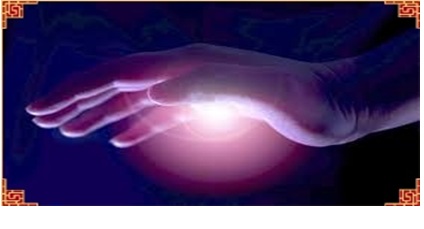
This is known as “absent treatment” also. You can transit your Prana through space, to your friend, who is living at a distance. He should have a receptive mental attitude. You must feel yourself en rapport (in direct relation and in sympathy) with the man, whom you heal with this Distant Healing method.
You can fix hours of appointment with them through correspondence. You can write to them: “Get ready at 4 a.m. Have a receptive mental attitude. Lie down in an easy chair. Close your eyes. I shall transmit my Prana.” Say mentally to the patient: “I am transmitting a supply of Prana (vital force).” Do Kumbhaka when you send the Prana. Practise rhythmical breathing also. Have a mental image that the Prana is leaving your mind when you exhale; it is passing through space and is entering the system of the patient.
The Prana travels unseen like the wireless (radio) waves and flashes like lightning across space. The Prana that is coloured by the thoughts of the healer is projected outside. You can recharge yourself with Prana by practising Kumbhaka. This requires long, steady and regular practice.
The practice of relaxing the muscles of the body will bring rest to the body and to the mind also. The tension of the muscles will be relieved. People who know the science of relaxation do not waste any energy. They can meditate well. Take a few deep breaths and then lie down flat on your back as in Savarana. Relax all the muscles of the body from head to feet. Roll on to one side and they relax as thoroughly as you can do. Do not strain the muscles. Roll on the other side and relax. This is naturally done by all during sleep. There are various exercises in relaxation, for the particular muscles of particular part of the body. You can relax the head, the shoulders, the arms, forearms, wrist etc. Yogins know the science of relaxation thoroughly. When you practice these various relaxation exercises, you must have the mental picture of calmness and strength.
Mental poise and calmness may be brought about by the eradication of worry and anger. Fear really underlies both worry and anger. Nothing is gained by worry and anger, but on the contrary much energy is wasted by these two kinds of lower emotions. If a man worries much and if he is irritable, he is indeed a very weak man. Be careful and thoughtful. All unnecessary worries can be avoided. Relaxation of the muscles reacts on the mind brings rest to the body also. Body and mind are intimately connected. Body is a mould prepared by the mind for its enjoyment.
Sit for 15 minutes in a relaxed and easy comfortable position. Close your eyes. Withdraw the mind from outside objects. Still the mind, silence the bobbing though. Think that the body is like a coconut shell and you are entirely different from the body.
Think that the body is and instrument in your hands. Identify yourself with the all-pervading Spirit or Atma. Imagine that the whole world and your body are floating like a piece of straw in this vast ocean of Spirit. Feel that you are in touch with the Supreme Being. Feel that the life of the whole world is pulsating, vibrating and throbbing through you. Feel that the ocean of life is gently rocking you on its vast bosom. Then open your eyes. You will experience immense mental peace, mental vigour and mental strength. Practise and feel this.
“The illusory Samsaric Vasana that has arisen through the practice of many lives, never perishes except through the practice of Yoga for a long time. …… It is not possible on the part of one to control the mind by sitting up again and again except through the approved means.”
“How could Jnana, capable of giving Moksha, arise certainly without Yoga? And even Yoga becomes powerless in secruing Moksha when it is devoid of Jnana. So the aspirant after emancipation should practice (firmly) both Yoga and Jnana.”
Thene the covering of the light is destroyed. Tamas and Rajas constitute the covering or veil. This veil is removed by the practice of Pranayama. After the veil is removed, the real nature of the soul is realised. The Chitta is by itself made up of the Sattvic particles, but it is enveloped by smoke. There is no purificatory action greater then Pranayama. Pranayama gives purity and the light of knowledge shines. The Karma of the Yogi, which covers up the discriminative knowledge, is destroyed as he practises Pranayama. By the magic panorama of desire, the essence, which is luminous by nature is covered up and the Jiva or individual soul is directed towards vice. This Karma of the Yogi which covers up the Light and binds him to repeated births, becomes attenuated by the practice of Pranayama every moment and is destroyed eventually. The affictions and sins constitute the cover according to Vachaspati.
Manu says: “Let the defects be burnt up by Pranayama.” Vishun Purana speaks of Pranayama as an accessory to Yoga: “He who wants the air known as Prana by practice is said to have secured Pranayama.”
“Dharanasu cha Yogyata Manasah”-
(control your mind)
The mind becomes fit for concentration you will be able to concentrate the mind, nicely after this veil of the light has been removed. The mind will be quite steady like the flame in a windless place as the disturbing energy has been removed. The word Pranayama is sometimes used collectively for inhalation, retention and exhalation of breath and sometimes for each of these severally. When the Prana Vayu moves in the Akasa-Tattva, the breathing will be lessened. At this time it will be easy to stop the breath. The velocity of the mind will be slowly lessened by Pranayama. It will induce Vairagya.
It you can suspend one inch of digit of breath inside, you will obtain the powers of foretelling; if you can suspend two inches within, you will get the power of thought-reading; for suspending the breath for three inches, levitation; for four inches, psychometry, clairaudience, etc; for five inches, moving about unseen by anybody in the world; for six inches, the power of “Kaya Siddhi”; for seven inches, entering the body of another man (Parakaya Pravesh); for eitht inches,
the power to make Devas to work as your servants; for ten inches Anima, Mahima and other Siddis; and for eleven inches, you will attain oneness with Paramatma. When through great practice the Yogi can perform Kumbhaka for full three hours, then he can balance himself on his thumb. He undoubtedly attains all kinds of Siddhis. Just as fire destroys the fuel, so also Pranayama destroys the bundles of sins. Pratyahara makes the mind calm. Dharana steadies the mind. Dhyana makes one forget the body and the world. Samadhi brings infinite bliss, Knowledge, Peace and Liberation.
During Yogic Samadhi, the flame of the Yogagni (fire of Yoga) extending from navel to the head melts the Amrita in the Brahmarandhra. The Yogi drinks this with joy and ecstasy. He can remain without food and drink for months by drinking this Yogic nectar alone.
The body becomes lean, strong and healthy. Too much fat is reduced. There is lustre in the face. Eyes sparkle like a diamond. The practitioner becomes very handsome. Voice becomes sweet and melodious. The student is free from all sorts of diseases. He gets established in Brahmacharya. Semen gets firm and steady. The Jatharagni (gastric fire) is augmented. The student becomes so perfect in Brahmacharya that his mind will not be shaken even if a fairy tries to embrace him. Appetite becomes keen. Nadis are purifies. The Vikshepa is removed and the mind becomes one-pointed. Rajas and Tamas are destroyed. The mind is prepared for Dharana and Dhyana. The excretions become scanty. Steady practice arouses inner spiritual light, happiness and peace of mind. It makes him an Oordhvareto_Yogi. Advanced students only will get all the other Siddhi mentioned above.
The mind of a man can be made to transcend ordinary experience and exist on plane higher than that of reason known as superconscious state of concentration and get beyond the limit of concentration. He comes face to face with facts which ordinary consciousness cannot comprehend.
This ought to be achieved by proper training and manipulation of the subtle forces of the body as to cause them to give, as it were, an upward push to the mind into the higher regions. When the mind is so raised into the super conscious state of perception, it begins to act from there and experience higher facts and higher knowledge. Such is the ultimate object of Yoga, which can be achieved by the practice of Pranayama. The control of the vibratory Prana means to a Yogi, the kindling of the fire of supreme knowledge, the realisation of the Self.
1. In the early morning, answer the calls of nature and sit for the practice. Practise Pranayama, in a dry, well-ventilated room. Pranayama requires deep concentration and attention. It is always better to have the practice in a steady sitting posture. Do not keep anyone by your side to avoid distraction of your mind.
2. Before you sit for Pranayama practice, thoroughly clean the nostrils well. you can take a small quantity of fruit-juice or a small cup of milk or coffee even before the practice. When you finish the practice take a cup of milk or light Tiffin (break-fast) after 10 minutes.
3. Have one sitting only in the morning during summer. If there is heat in the brain or head, apply Amla oil or butter on the head before you take your bath. Take Misri Sherbat by dissolving sugarcandy in water. This will cool your whole system. Do Sitali Pranayama also. You will not be affected by the heat.
4. Strictly avoid too much talking, eating, sleeping, mixing with friends and exertion. “Verily Yoga is not for him who eateth too much, nor who abstaineth to excess, is addicted to too much, nor who abstaineth to excess, is addicted to too much sleep nor even to wakefulness” .
5. Take a little ghee with rice when you take your meals. This will lubricate the bowels and allow Vayu to move downwards freely. “Mitaharam vina yastu yogarambham tu karayet”. “Nanarogo bhavettasya kinchid yogo na sidhyati”
6. Perfect celibacy for six months or one year will doubtless enable you to acquire rapid progress in the practice and in spiritual advancement. Do not talk with ladies. Do not laugh and joke with them. Shum their company entirely. Without Brahmacharya and dietetic regulations if you practise Yogic exercises, you will not get maximum benefit in the spiritual practices. But, for ordinary health you can practise mild exercises.
7. Be regular and systematic in your practice. Never miss a day. Stop the practice when you are ailing seriously. Some people twist the muscles of the face when they do Kumbhaka. It should be avoided. It is a symptom to indicate that they are going beyond their capacity. This must be strictly avoided. Such people cannot have a regulated Rechaka and Puraka.
8. Obstacles in Yoga: “Sleeping in daytime, late vigil over night, excess of urine and faces, evil of unwholesome food and laborious mental operation with Prana.” When one is attacked by any disease, he says that the disease is due to the practice of Yoga. This is serious mistake.
9. Get up at 4 a.m. meditate or do Japa for half an hour. Then do Asanas and Mudras. Take rest for 15 minutes. Then do Pranayama. Physical exercieses can be conveniently comblined with Asanas. If you have sufficient time at your disposal, you can have it after finishing all the Yogic exercises and meditation. Pranayama cab also be performed as soon as you get up from bed just before Japa and meditation. It will make your body light and you will enjoy the meditation. You must have a routine according to your convenience and time.
10. Maximum benefit can be derived if Japa also is done during the practice of Asana and Pranayama.
11. It is always better to start Japa and meditation in the early morning at 4 a.m. as soon as you get up from bed. At this time the mind is quite calm and refreshed. You can have good concentration.
12. Vast majority of persons waste their precious time in the early morning in the early morning in answering the calls of nature for half an hour and washing their teeth for another half an hour. This is bad. Aspirants should try to defecate within 5 minutes and cleanse their teeth within 5 minutes. If the bowels ate constipated, have vigorous practice of Salabh, Bhujang and Dhanur Asanas for 5 minutes as soon as you get up from bed. If you are habituated to answer the calls of nature, late, you can do so after finishing the Yogic exercises.
13. First do Japa and meditation. Then you can take to Asana and Pranayama exercises. Then finish the course of practice by another short sitting in meditation.
14. As there is always some drowsiness when you get up from bed, it is desirable to do some Asanas and a little Pranayama for five minutes just to drive off this drowsiness and to make you fit for meditation. The mind gets one-pointed after the practice of Pranayama. Pranayama, though it concerns with the breath, gives good exercise for various internal organs and the whole body.
15. The general order of doing Kriyas is: First do all Asanas, then Mudras, then Pranayama and then Dhyana. Since the early morning time is suitable for meditation, you can follow this order: Japa. Meditation, Asanas, Mudras and Pranayama. This is a better way. You can follow the order which is suitable to you. After doing Asana, take rest for five minutes and then begin Pranayama.
16. Some Hatha Yogic books interdict cold bath in the early morning. Probably the reason may be that one may catch clod or develop any complaint of the lungs, if he takes cold bath at 4 a.m. particularly in cold places like Kashmir, Mussorie, Darjeeling, etc. There is no restriction in hot places. I am always in favour of cold baths before one starts the Yogic practices as it is refreshing and stimulation. It drives off drowsiness. It brings in equilibrium of circulation of blood. There is a healthy flow of blood towards the brain.
17. Asanas and Pranayama remove all sorts of diseases, improve health, energies digestion, invigorate the nerves, straighten the Sushumna Nadi, remove Rajas and awaken Kundalini. Practice of Asanas and Pranayama bestows good health and a steady mind. As no Sadhana is possible without good health and as no meditation is possible without a steady mind, Hatha Yoga is of immense use for Dhyana Yogins, Karma Yogins, Bhaktas and Vedantins as well.
18. The maintenance of the body is impossible without Asanas or any kind of physical exercises or activities. Even an orthodox Vedanti is an unconscious Hatha Yogi. He practises some kind of Asana daily. He practises Pranayam also unconsciously because during meditation, Pranayam comes by itself.
19. Whenever you feel uneasy, depressed or dejected, practise Pranayama. You will be at once filled with new vigour, energy and strength. You will be elevated, renovated and filled with joy. Do this and try. Before you begin to write something, an essay, an article or a thesis, does Pranayama first. You will bring out beautiful ideas and it will be an inspiring, powerful and original production.
20. Be regular in the practice. Regularity in the practice is very necessary if one wants to realise the maximum benefits of Asanas and Pranayama. Those who practise by fits and starts will not derive much benefit. Generally people practise for two months in the beginning with great enthusiasm and leave off the practice. This is a sad mistake. They always want a Yogic teacher by their side they have got the effeminate leaning mentality. They are lazy, torpid and slothful.
21. People do not want to remove Mala (impurity) by selfless service and Vikshepa by Yogic practices. They at once jump to awaken the Kundalini and raise Bbrahmakara Vritti. They will only break their legs. Those who attempt to awaken the Kundalini by Asanas and Pranayama, should have purity in thought, word and deed. They should have mental and physical Brahmacharya. Then only they can enjoy the benefits of awakening the Kundalini
22. Sow the seed of spirituality in your young age. Do not waste Veerya. Discipline the Indriyas and mind. Do Sadhana. When you become old, it will be difficult for you to do any rigid Sadhana. Therefore be on the alert during your teens; you will see for yourself in a short time the particular benefits you derive from particular kinds of Sadhana.
23. When you advance in spiritual practices; you must observe strict Mauna (vow of silence) for 24 hours continuously. This must be continued for some months also. Everyone should select a course of few exercises in Asana, Pranayama and meditation according to one’s temperament, capacity, convenience and requirement.
24. It is quite possible for a man to practise celibacy, albeit there are various sorts of temptations and distraction. A well-disciplined life, study of scriptures, Satsang, Japa, Dhyana, Pranayama, Sattvic and moderate diet, daily introspection, and enquiry, self-analysis and self-correction, Sadachara, practice of Yama, Niyama, physical and verbal Tapas, all will pave a long way in the attainment of this end. People have irregular, unrighteous,
25. immoderate, irreligious undisciplined life. Hence they suffer and fail in the attainment of the goal of life. Just as the elephant throws sand on its own head, so also they themselves bring difficulties and troubles on their own heads on account of their foolishness.
26. Do not shake the body unnecessarily. By shaking the body often the mind also is disturbed. Do not stretch the body every now and then.
27. The Asana should be steady and firm as a romk whin you do Pranayama, Japa and meditation.
28. You must find out for yourself according to your health and constitution what sort of dietetic regulation will suit and what particular Pranayama will exactly help you. The only you can safely proceed with your Sadhana. First read all the instructions of the various exercises given in this book from the beginning to the end. Clearly understand the technique. If you have any doubts, just ask any Yogic student to demostrate and then practise it. This is the safest method. you should not select any one of the exercises at random and begin to practise it in a wrong way.
29. In all the exercises I have suggested Mantra “Om” is the time-unit. You can have your Guru Mantra, Rama, Siva, Gayatri or mere number as the time-unit according to your inclination. Gayatri or Om is the best for Pranayama. In the beginning you must observe some time-unit for Puraka, Kumbhaka and Rechaka. The time-unit and the proper ratio come by itself when you do the Puraka, Kumbhaka and Rechaka as long as you can do it comfortably. When you have advanced in the practice, you need not count or keep any unit. You will be naturally established in the normal ratio through force of habit. For some days in the beginning you must count the number and see how you progress. In the advanced stages, you need not distract the mind in counting. The lungs will tell you when the required number is finished.
30. Do not continue the Pranayama when you are fatigued. There must be always joy and exhilaration of spirit during and after the practice. You should come out of the practice fully invigorated and refreshed. Do not bind yourself by too many rules (Niyamas).
31. Do not take bath immediately after Pranayama is over. Take rest for half an hour. If you get perspiration during the practice, do not wipe it with a towel. Rub it with your hands. Do not expose the body to the chill draughts of air when you perspire.
32. Always inhale and exhale very slowly. Do not make any sound. In Pranayamas like Bhastrika, Kapalabhati, Sitali and Sitkari, you can produce a little mild or the lowest possible sound.
33. You should not expect the benefits after doing it for 2 or 3 minutes only for a day or two. At least you must have 15 minutes daily practice in the beginning regularly for days together. There will be no use if you jump from one exercise to another everyday. You must have a particular exercise for your
daily Abhyasa, which you should improve to a high degree. Other exercises, of course, you can have for occasional practice along with the daily exercise. You must have Bhastrika, Kapalabhati and ‘Easy Comfortable Pranayama’ for your daily practice; and Sitali, Sitkari, etc., can be practised occasionally.
34. The Puraka is otherwise known as ‘Nissvasa’ and Rechaka is known as ‘Uchhvasa’. The mental process in Kevala Kumbhaka is called ‘Sunyaka form’ of breath regulation. Steady, systematic practice and gradual increase of Kumbhaka is known as “Abhyasa Yoga”, swallowing of air and living on this air alone is known as Vayubhakshana.’
35. The author of Sivayoga Dipika describes three kinds of Pranayama: Prakrita, Vaikraita and Kevala Kumbhaka. “If the Prana is in the form of breath inhaled and exhaled, on account of its natural quality of going out and coming in, the Pranayama is known as Prakrita. If the Prana is restrained by the threfold means of throwing out, taking in and stopping the breath in accordance with the rules prescribed in the Shastras, it is called Vaikraita or artificial. But with great men who have risen above these two kinds of restraining breath, the sudden restraining of the vital currnts directly (without inspiration and expiration), is Kevala Kumbhaka. Prakrita Pranayama belongs to Mantra Yoga. Vaikrita belongs to Laya Yoga.”
36. That is called Kumbhaka (cessation of breath) when there is neither expiration nor inspiration and the body is motionless, remaining still in one state. Then he sees forms like the bling, hears sounds like the deaf and sees the body like wood. This is the characteristic of one who has attained quiescence”. “Spread a tiger-skin or a deer-skin or a fourfold blanket. Over this spread a piece of white cloth. Then sit for the Pranayama practice facing the North”.
37. Some would take the order as exhaling, inhaling and retaining; others as inhaling, retaining and exhaling. The latter is more common. In Yahnavalkya, we find the different kinds of breath regulation mentaioned in the order of Puraka, Kumbhaka and Rechaka; whereas, in Naradiya text we have them in the order as Rechaka, Puraka and Kumbhaka. The two are to be regulated as optional alternatives.
38. A Yogi should always avoid fear, anger, laziness, too much sleep or waking and too much food or fasting. If the above rule be well strictly practised, each day spiritual wisdom will arise of itself in three months without doubt; in four months, he sees the Devas; in five months he knows or becomes a Brahmanishtha; and truly in six months he attains Kaivalya at will. There is no doubt.
39. A neophyte should do Puraka and Rechaka only without any Kumbhaka for some days. Take a long time to do Rechaka. The proportion for Puraka and Rechaka is 1:2.
40. Pranayama in its popular and preparatory form may be practised by every one in any posture whatsoever, sitting or walking; and yet is sure to show its benefits. But to those who practise it in accordance with the specific methods prescribed, fructification will be rapid.
41. Gradually increase the period of Kumbhaka. Retain for 4 seconds in the first week, for 8 seconds in the second week, for 12 seconds in the third week and so on, till you are able to retain the breath to your full capacity.
42. Common-sense or Yukti should be used throughout your practice. If one kind of exercise is not agreeable to your system, change it after due consideration or consultation with your Guru. This is Yukti. Where there is Yukti, there is Siddhi, Bhukti and Mukti (perfection, enjoyment and salvation).
43. You must so nicely adjust the Puraka, Kumbhaka and Rechaka that you should not experience the feeling of suffocation or discomfort at any stage of Pranayama. You should never feel the necessity of catching hold of a few normal breaths between any two successive rounds. The duration of Puraka, Kumbhaka and Rechaka must be properly adjusted. Exercise due care and attention. Matters will turn to be successful and easy.
44. You must not unnecessarily prolong the period of exhalation. If you prolong the time of Rechaka, the following inhalation will be done in huried manner and the rhythm will be disturbed. You must so carefully regulate the Puraka, Kumbhaka and Rechaka that must be absolutely comfortable and perform not only one Pranayama but also the full course or required rounds of Pranayama. Experience and practice will make you all right. Practice makes one perfect. Be steady. Another Important factor is that you must have efficient control over the lungs at the end of Kumbhaka to enable you to do the Rechaka smoothly and in proportion with the Puraka.
45. Suryabheda and Ujjayi produce heat. Sitkari and Sitali are cooling. Bhastrika preserves normal temperature. Suryabheda destroys the excess of wind; Ujjayi phlegm; Sitkari and Sitali bile; and Bhastrika all the three.
46. Suryabheda and Ujjayi must be practised during winter. Sitkari and Sitali must be practised in summer. Bhastrika and Sitali must be practised in summer. Bhastrika can be practised in all seasons. Those persons whose bodies are hot even in winter can practise Sitali and Sitkari during winter season.
47. Goal of life is Self-realisation. “This is brought about by means of the subjugation of the body and the senses, the service to a good Guru, the hearing of Vedantic doctrine and constant meditation thereon” (Niralamba Upanishad). If you are really sincere and if you wish to have a quick, sure success, you must have a systematic routine for Asana, Pranayama, Japa, Meditation, Svadhyaya, etc. You must be very careful in keeping up Brahmacharya. Effective means to control the mind are the attainment of spiritual knowledge, association with the wise, the entire abdication of all Vasanas and control of Pranayama” (Muktikopanishad).
48. Once again I will tell you that Asana, Pranayama, Japa, Dhyana, Brahmavichara, Satsanag, solitude, Mouna, Nishkama Karma are all absolutely necessary for spiritual attainments. One can hardly obtain perfection in Raja Yoga without Hatha Yoga. At the end of Kumbhaka you should withdraw the mind from all the objects. By gradual practice you will be established in Raja Yoga.
49. Some students who are studying Vedantic books think that they are Jnanis and they ignore Asana, Pranayama, etc. They also should practise these, till they are perfect in Shat-Sampat of the Sadhana-Chatushtaya-Sama, Dama, etc., the preliminary qualifications of Jnana Yoga.
50. Do not hesitate. Do not be waiting to get a Guru who will sit by your side and watch you daily for a long time. If you are sincere, regular and systematic and if you follow the rules and instructions of this book very carefully, there will be no trouble at all. You will undoubtedly, there will be no trouble at all. You will undoubtedly get success. Slight errose may crop up in the beginning, it does not matter. Do not unnecessarily be alarmed. Do not give up the practice. You will yourself learn how to adjust. Common-sense, instinct, the shrill inner voice of the soul will help you in the path. Everything will come out smoothly in the end. Start the practice this very second in right earnest and become a real Yogi.